What Happens When You Switch Website Providers (Without Losing Your Ranking)
The new website isn't what worries most people. Losing the ranking they've already built is. Here's what actually protects it, and what doesn't.
What protects your ranking
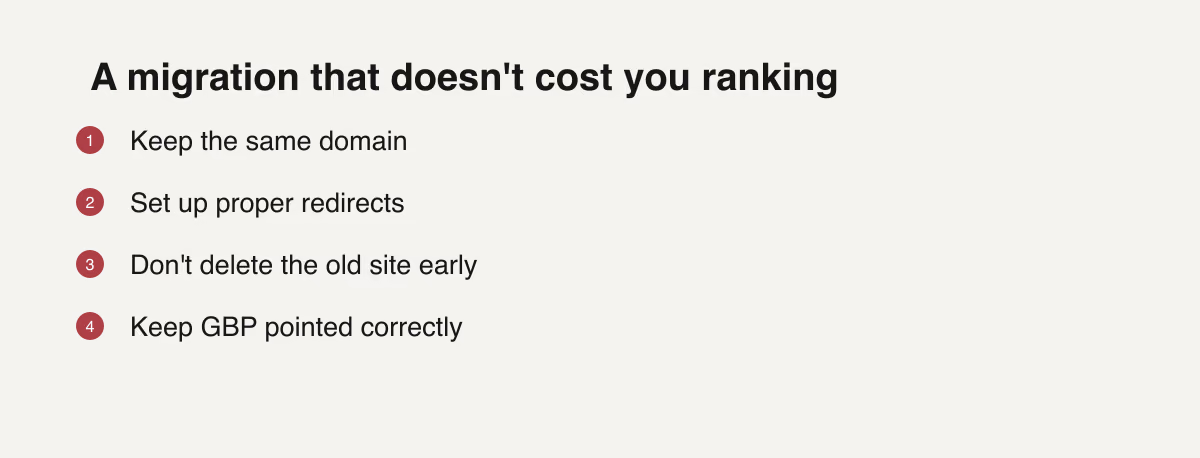
Keeping the same domain. moving to a new domain name is the single biggest risk, staying on the one you already have avoids most of the problem entirely
Proper redirects for any changed URLs. if a page's address changes, a redirect tells Google and your visitors where it moved, instead of leaving a dead link
Not deleting the old site too early. the new site should be fully live and showing up in search before the old one disappears
Keeping your Google Business Profile pointed correctly. it should link to the new site the moment it goes live, not sit pointed at the old one
What actually causes ranking loss
It's almost never the switch itself. It's a sloppy one, a new domain nobody warned Google about, broken links where old pages used to be, or weeks of the site being down mid-move. A careful migration, done over a day or two with redirects in place, shouldn't cost you anything you've already earned.
Will switching website providers hurt my Google ranking?
Not if it's done carefully. Keeping the same domain, setting up redirects for any changed pages, and not taking the old site down too early protects what you've already built.
What's the biggest risk when moving to a new website?
Switching to a new domain name without redirects. That's what actually causes ranking loss, not the new design or new provider itself.
Should I keep my old website live during the switch?
Yes, until the new one is fully live and showing up in search. Taking the old site down too early creates a gap that costs you.
Do I need to update my Google Business Profile when I switch websites?
Yes, point it at the new site the moment it goes live. Leaving it pointed at the old one undercuts the whole move.