
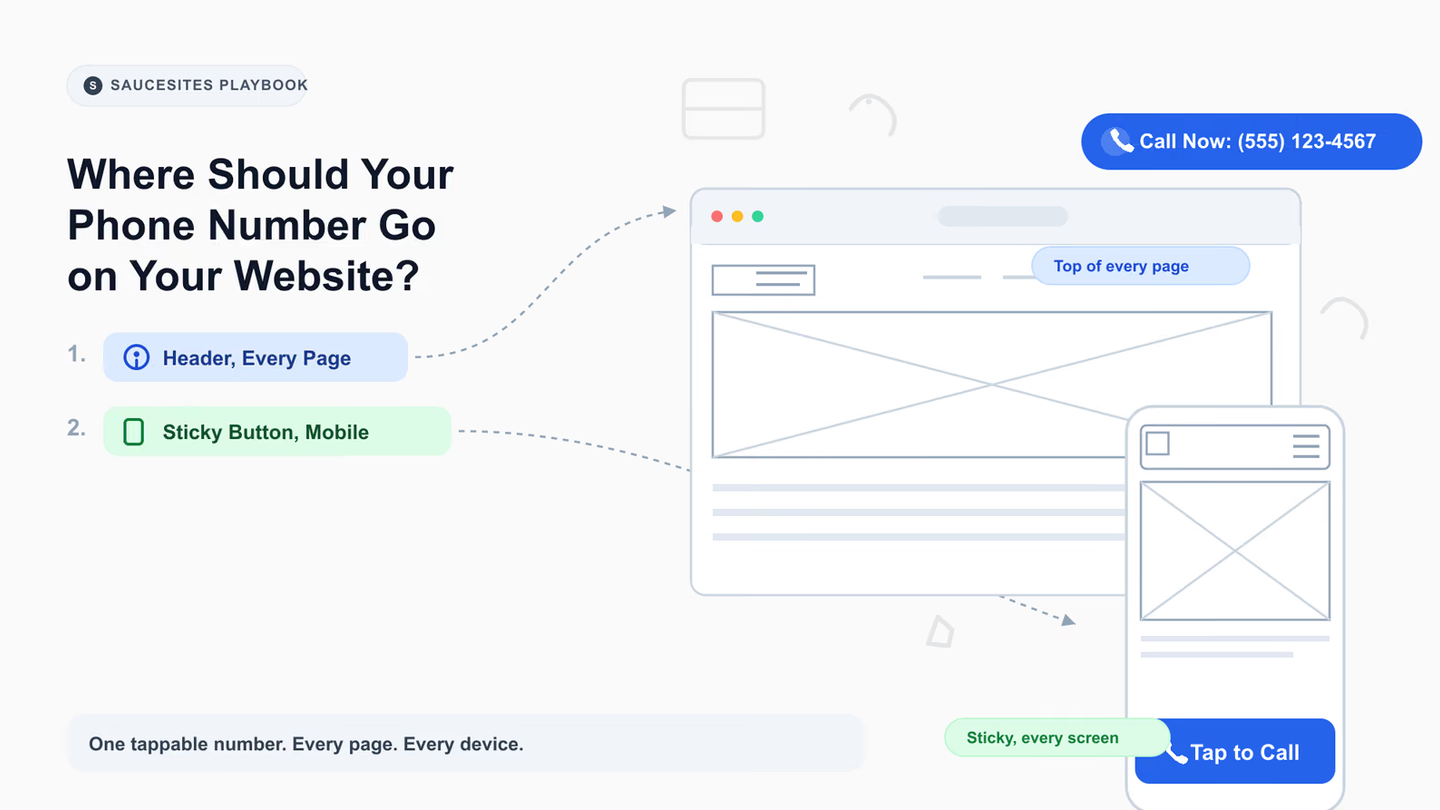
The two places it has to be
In the header, on every single page. not just the homepage, since a visitor can land on any page first from a search result
As a sticky click-to-call button on mobile. a bar that stays visible while someone scrolls, so the number is always one tap away, not a scroll back to the top
Why a tappable link beats text nobody can tap
If your number is just text on the page, someone on a phone has to copy it, open their dialer, and paste it in. That's three extra steps most people won't bother with. A proper tel: link turns the number itself into a button, so tapping it opens the dialer with the number already filled in. It's a small technical detail, and it's the difference between a tap and a missed call.
Should you use a tracking number instead of your real one?
If you want to know which marketing channel is actually bringing in calls, yes, a dedicated tracking number that forwards to your real line can tell you. If you're not running more than one or two marketing channels, your real number is simpler and good enough.
We cover the options, free and paid, in the best call-tracking tools for contractors.
One number everywhere, or different numbers in different places?
Whatever number ends up on your website, use the exact same one on your Google Business Profile, your truck, and anywhere else your business is listed. Google and other directories cross-check that your business shows up consistently across the web, and a mismatched number quietly hurts your local ranking.
That consistency matters more than most contractors realize. See citations and local backlinks: the quiet local SEO advantage most contractors skip for why.