What it actually does
It answers your business line when you can't, asks a few basic questions (name, problem, address, urgency), and sends you a text or email with the details. Some can book straight into your calendar. None of them replace you talking to the customer eventually, they just make sure nobody hangs up with nothing.
The three flavors, and a real example of each
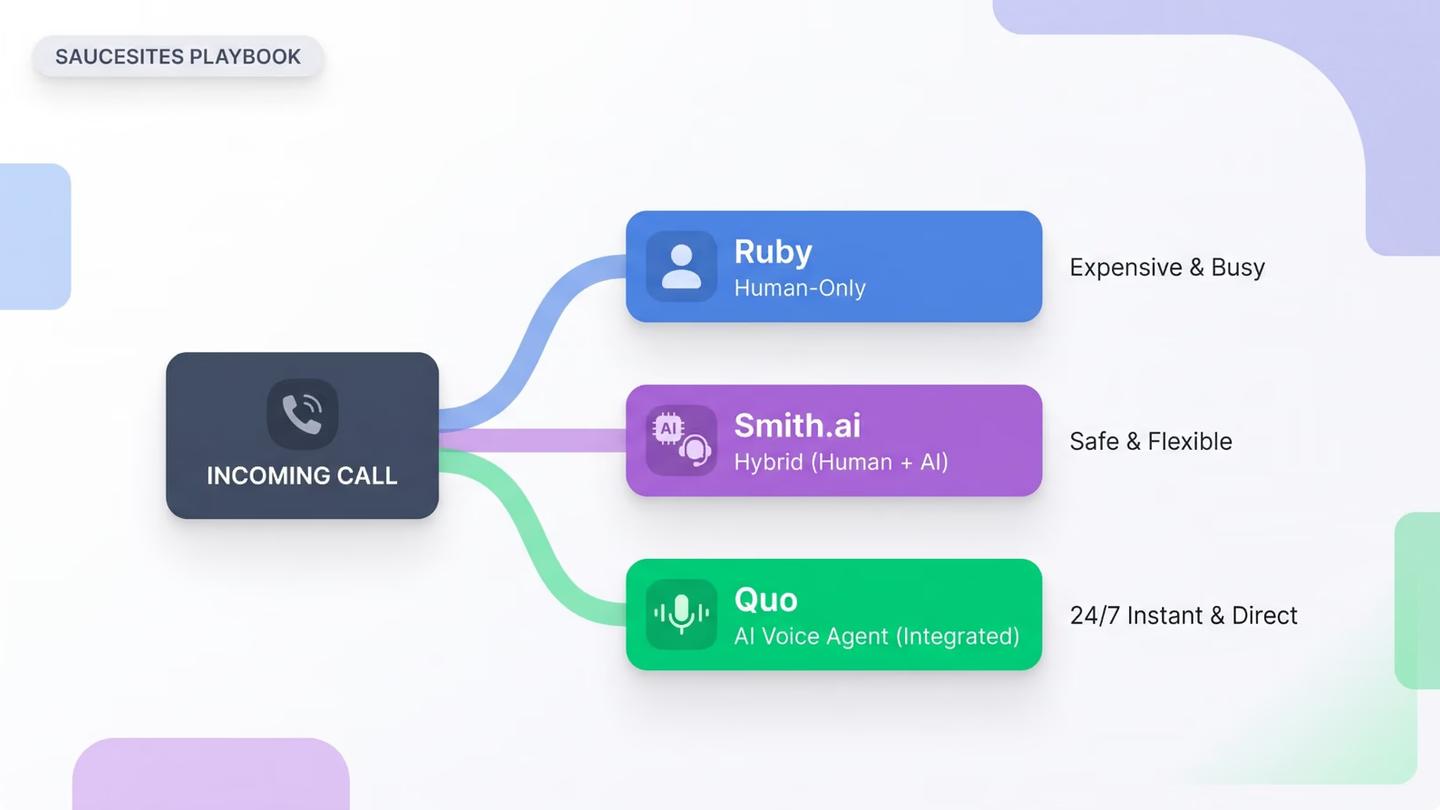
AI with human backup. handles routine calls itself, hands off anything complicated to a live person. A hybrid service like Smith.ai works this way
Human-only, premium. every call picked up by a real receptionist, no AI in the loop at all. Ruby is the usual name here, and it costs more for it
An AI voice agent built into your phone system. instead of a separate answering service, your regular business phone app answers with AI when you don't. Quo (formerly OpenPhone) builds this in alongside missed-call text-back
Worth comparing directly before picking one: Smith.ai, Ruby, and Quo.
Where AI answering actually falls down
A loud job site with a bad cell connection confuses voice AI more than it confuses a person. A caller who's genuinely upset, mid-emergency, or asking something oddly specific to your trade can end up talking to something that sounds slightly off, and that costs you more than a missed call would. The hybrid model exists specifically to catch those calls and route them to a human before that happens.
Is it worth it for a 1-3 truck business?
Run the same math as a missed call. If you're missing even a handful of calls a week and a decent share of those would've booked, one extra job a month usually covers the cost on its own. If you already answer almost everything yourself, a cheaper missed-call text-back tool alone may do the job without the monthly fee of a full answering service.
We break that comparison down fully in the real cost of a missed call for a plumbing or HVAC business.